
Managed IT service providers ranked by response time in 2026 come down to service model, not marketing copy: coverage hours, escalation tiers, and how alerts get triaged before a technician ever touches the ticket.
- TeraCloud's 24/7 AI-driven managed IT model wins for continuous coverage among managed IT providers ranked by response time in 2026.
- Co-managed IT support suits teams with an internal IT lead who need overnight and weekend escalation coverage.
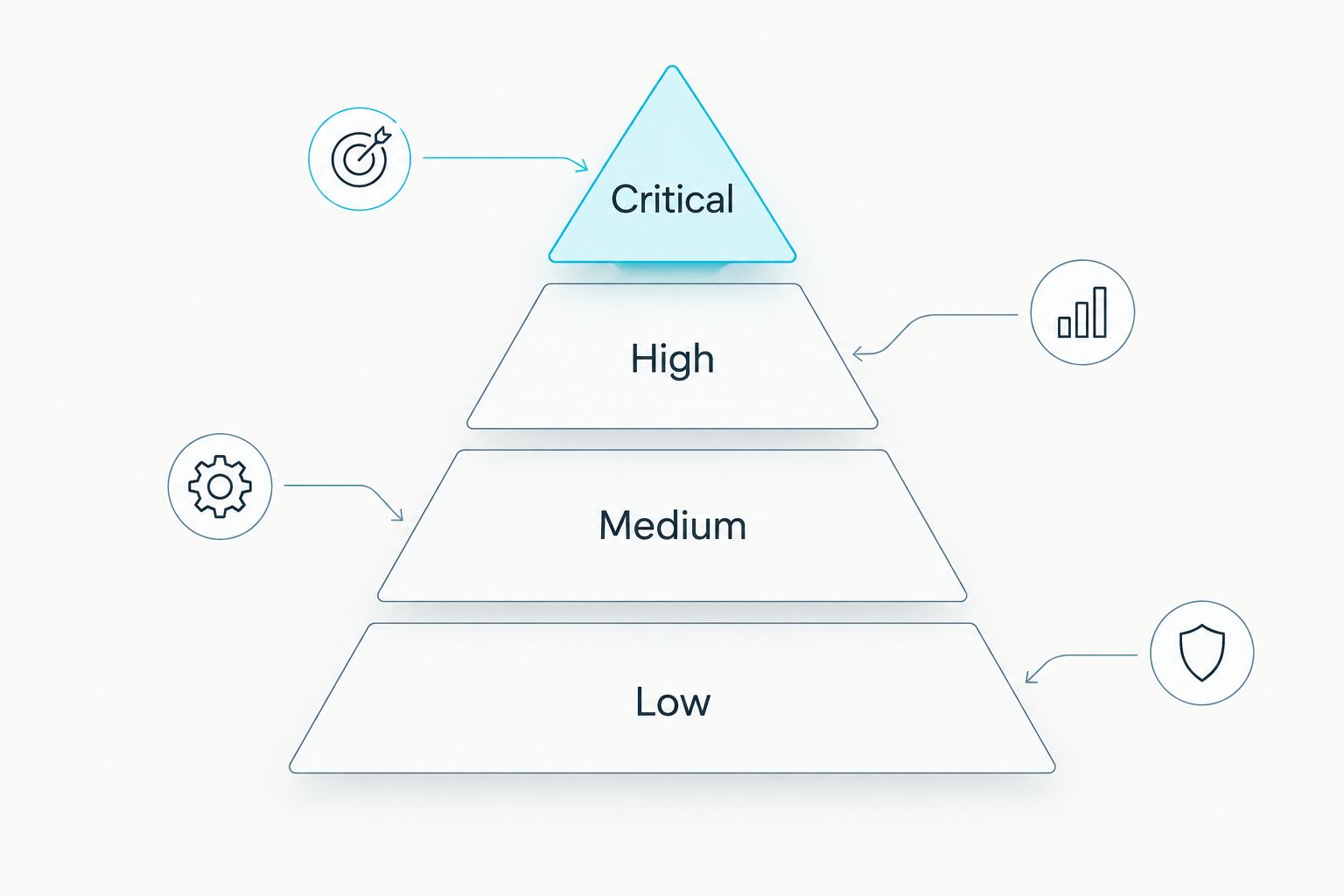
- MDR-first providers triage security incidents ahead of routine tickets, following standard Severity 1 through Severity 4 tiers.
- Traditional break-fix support is the budget option but carries no monitoring and no written SLA.
- vCISO-led compliance models fit regulated industries where response time follows audit deadlines, not raw speed.
Why this matters
"Fast response" is the least meaningful phrase on any managed IT provider's homepage. The number that actually matters is time-to-acknowledgment on a Severity 1 incident (a server down, a ransomware alert), not the average hold time on a password reset ticket.
A provider that quotes "fast response" without naming a severity tier is reading a marketing line, not an SLA. Businesses comparing managed IT service providers for small businesses in 2026 need to look at escalation structure first, because that structure decides whether a server outage gets a callback in minutes or a ticket number in a queue.
The ranking below groups providers by service model rather than by name, because response time is a function of how a provider is built to triage, not a number any vendor can promise in isolation.
What makes the best managed IT provider for response time
- Time-to-acknowledgment on critical issues — not a vague average across every ticket type
- True 24/7 coverage versus business-hours-only with an after-hours answering service
- Escalation tiers that put security incidents ahead of routine requests
- Staffing model — in-house technicians versus outsourced ticket queues that hand off between shifts
- Written SLA commitments versus "we'll get to it when we can"
- Proactive monitoring that catches an issue before a ticket is ever filed
Managed IT providers ranked by response time: at a glance
| Model | Best for | Standout feature | Key limitation |
|---|---|---|---|
| TeraCloud 24/7 AI-driven managed IT | Continuous monitoring across multiple states | AI-based alerting flags issues before a ticket is even filed | Every provider, TeraCloud included, still triages by the same severity-tier structure |
| Co-managed IT support | Businesses with an internal IT lead | Overnight and weekend escalation without replacing internal staff | Needs a documented handoff or coverage gaps appear |
| MDR-first model | Security-first response triage | Security alerts jump ahead of routine tickets | Non-security requests wait behind active security triage |
| vCISO-led compliance model | Regulated industries — healthcare, finance, legal | Response process built around audit and breach-notification deadlines | Slower for everyday, non-compliance IT requests |
| Traditional break-fix support | Very small operations, minimal IT dependency | Lower flat commitment, pay only when something breaks | No proactive monitoring, and usually no written SLA at all |
1. TeraCloud's 24/7 AI-driven managed IT model: best for continuous coverage across multiple locations
TeraCloud runs managed IT, cybersecurity, cloud migration, and AI automation under one 24/7 support model, covering clients in Texas, Florida, Wyoming, and nationwide. The AI-driven monitoring layer is built to flag anomalies (a spiking CPU, a failed backup job, unusual login activity) before they turn into a support ticket at all.
TeraCloud pros:
- Single vendor covers monitoring, cybersecurity, cloud, and AI automation instead of stitching together three contracts
- Around-the-clock coverage instead of business-hours-only support with an after-hours voicemail
- Proactive alerting catches problems before a user notices anything is wrong
TeraCloud cons:
- A single-vendor model requires trust that one partner executes well across every domain it covers, not just its strongest one
- Businesses already running an internal IT hire may find a fully outsourced model duplicates work that hire is already doing
Verdict: Buy for organizations that want one 24/7 managed IT partner instead of a patchwork of vendors.
2. Co-managed IT support: best for teams with an internal IT lead who need overflow coverage
Co-managed IT support splits the work: an internal IT staffer handles day-to-day requests during business hours, and an external partner covers overnight, weekend, and specialized-project escalation. It's the model most businesses land on once they've outgrown a solo IT hire but aren't ready to outsource everything.
Co-managed IT pros:
- Internal staff keep control over daily priorities and vendor relationships
- External partner absorbs overnight and weekend response, which is where solo IT hires burn out fastest
- Specialized projects (cloud migration, cybersecurity hardening) get expert coverage without a full-time hire
Co-managed IT cons:
- Response time depends on a clean handoff between internal and external teams — a fuzzy line creates gaps
- Only makes sense once a business already has 1 or more internal IT staff to co-manage with
Verdict: Buy for businesses with an existing IT lead who needs backup, not a replacement.
3. MDR-first model: best for security-first response triage
A managed detection and response (MDR) model triages security alerts ahead of everything else in the queue. That's the industry-standard structure: Severity 1 incidents (active breach, ransomware behavior) get near-immediate acknowledgment, while Severity 4 informational alerts can sit in a 24-48 hour window without causing harm.
MDR-first pros:
- Security incidents get the fastest possible response, which shortens breach dwell time
- Aligns naturally with compliance requirements that expect documented incident response
- Reduces the odds a minor alert gets buried behind 50 password-reset tickets
MDR-first cons:
- Routine help-desk requests can wait behind active security triage on a busy day
- Usually requires a separate intake path for non-security issues, which adds process overhead
Verdict: Buy for any business handling regulated or high-risk data.
4. vCISO-led compliance model: best for regulated industries where response time follows audit deadlines
A vCISO-led model builds response time around compliance windows — breach assessment and notification deadlines — rather than pure speed. This fits healthcare, finance, and legal practices where a documented, audit-ready response process matters as much as how fast the phone gets answered.
vCISO-led model pros:
- Response process is documented and defensible in an audit
- Reduces regulatory exposure by design, not as an afterthought
- Predictable structure for firms that already answer to a compliance body
vCISO-led model cons:
- Slower for everyday, non-compliance IT requests than a pure speed-first model
- Administrative overhead usually prices this model for compliance-heavy sectors, not general small businesses
Verdict: Hold for non-regulated small businesses. Buy for finance, healthcare, and legal firms.
5. Traditional break-fix support: the budget option, and the slowest one
Break-fix support means no ongoing monitoring — a technician gets called only after something has already broken, and the business is billed per incident. It's the cheapest commitment on this list and the one with the least predictability.
Break-fix pros:
- No monthly subscription commitment
- Simple enough for a one- or two-person operation with minimal IT dependency
Break-fix cons:
- No proactive monitoring means problems get caught late, sometimes after real damage is done
- Response time depends entirely on technician availability that day — there's usually no written SLA at all
- No security triage structure, so a breach and a printer jam wait in the same queue
Verdict: Skip if uptime matters to the business at all. Wait only applies to operations with almost no IT footprint.
How this list was ranked
Each model was ranked against the criteria above: acknowledgment time by severity tier, real coverage hours, staffing transparency, and whether monitoring is proactive or purely reactive. Models that triage by severity and monitor continuously outrank models that wait for a phone call, which is why break-fix sits last every time.
Get your response-time SLA reviewed
See how your current provider's escalation tiers compare.
Which managed IT model should you choose in 2026?
If the business runs on shared infrastructure with real uptime stakes — a practice, a firm, a multi-location operation — the 24/7 AI-driven monitoring model is the default answer, because it catches issues before they need a phone call at all. If there's already an internal IT hire drowning in after-hours calls, co-managed IT support fixes that specific problem without a full outsourcing switch. Regulated businesses should weight the vCISO-led and MDR-first models heavier than raw speed. Break-fix stays reasonable only for the smallest, lowest-dependency setups, and even then, it's a Skip the moment downtime starts costing real money.
FAQ
What is the fastest managed IT service provider model in 2026?
The 24/7 AI-driven monitoring model, like TeraCloud's, is the fastest because it flags issues before a ticket is even filed. Break-fix support is the slowest because no one is watching until something already broke.
How much does a managed IT provider's response time actually matter?
It matters most for Severity 1 incidents — a server outage or active breach — where every minute of delay adds direct cost. For low-priority requests, a 24-48 hour window is standard and rarely a problem.
Is co-managed IT support better than fully outsourced IT?
It depends on whether a business already has an internal IT hire. Co-managed support is better when that hire exists and needs overnight backup; fully outsourced 24/7 support is better when there's no internal staff at all.
How much do managed IT services cost for small businesses in 2026?
Cost varies by service model and scope — monitoring-only plans cost less than models bundling cybersecurity, cloud, and AI automation. Get a quote based on your specific infrastructure rather than a flat industry number.
What are Severity 1 through Severity 4 tiers in an IT support SLA?
They're the standard priority tiers used across managed IT SLAs: Severity 1 covers critical, business-stopping issues; Severity 4 covers low-priority, informational items. Acknowledgment time gets faster as severity rises.
Does a faster response time always mean better managed IT support?
No. A provider can answer fast and still lack the escalation structure to fix a real incident quickly. Response time matters alongside proactive monitoring and a written SLA, not on its own.
Should regulated businesses prioritize response time or compliance process?
Compliance process first. A vCISO-led or MDR-first model that documents its response for auditors matters more to a healthcare or finance firm than shaving minutes off acknowledgment time.
One last thing
The fastest-sounding claim on a managed IT provider's site — "we respond in minutes" — usually describes the first phone pickup, not the Severity 1 acknowledgment tier that determines whether a real outage gets fixed fast. Ask any provider being evaluated for 2026 to name their actual severity tiers before signing anything; a provider that can't produce that structure in writing doesn't have one.


